Get The Latest News, Advice & Best Practice From Blog

EIN Requirements for Cryptocurrency and Digital Asset Businesses
As cryptocurrency and digital asset markets continue to expand in the United States, regulatory expectations around taxation, compliance, and reporting have become far more structured. Whether you're launching a crypto exchange, mining operation, NFT marketplace, DAO, or Web3 startup, one requirement appears almost universally: obtaining an Employer Identification Number (EIN).
Nov. 16, 2025, 10:43 a.m.
Read more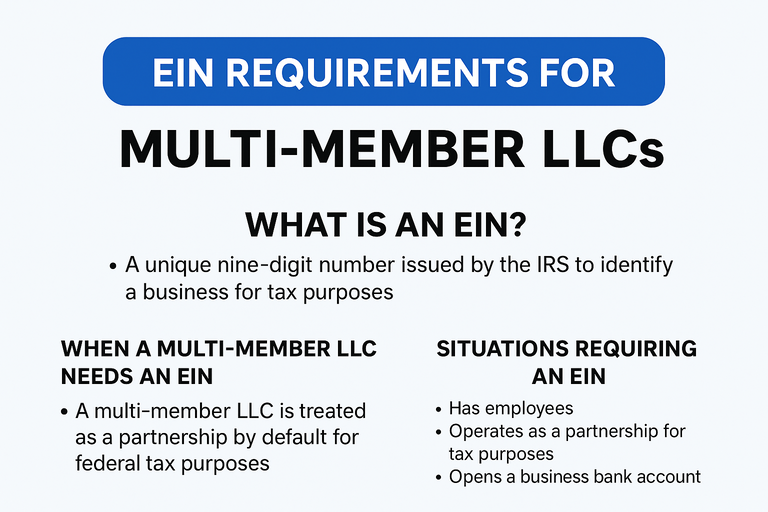
EIN requirements for multi-member LLCs
Clear breakdown of EIN (Employer Identification Number) requirements for multi-member LLCs in the U.S.:
Nov. 14, 2025, 5:02 p.m.
Read more
EIN Registration for Corporations (C-Corp and S-Corp)
Every corporation operating in the United States—whether a C-Corporation (C-Corp) or an S-Corporation (S-Corp)—is required by the IRS to have an Employer Identification Number (EIN). This nine-digit number functions like a business’s Social Security Number and is used for tax filings, payroll, banking, and legal identification. Whether you’re forming a new corporation or converting an existing business, understanding how to register for an EIN is one of the first steps to staying compliant with federal and state tax laws.
Nov. 13, 2025, 7:16 p.m.
Read more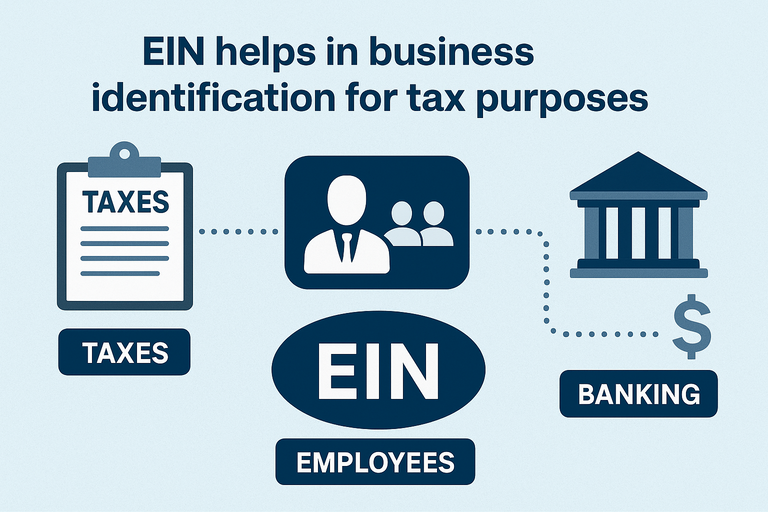
How EIN helps in business identification for tax purposes
The Employer Identification Number (EIN) plays a crucial role in identifying a business for tax purposes in the United States. Here’s a detailed explanation:
Nov. 12, 2025, 5:39 p.m.
Read more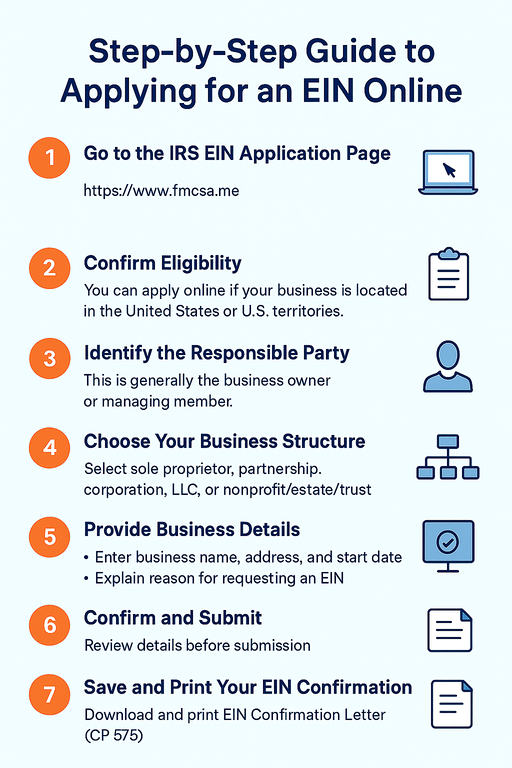
Step-by-Step Guide to Applying for an EIN Online
If you’re starting a business in the United States, one of the first tasks you’ll need to complete is getting an Employer Identification Number (EIN). Also known as a Federal Tax Identification Number, an EIN is issued by the Internal Revenue Service (IRS) and serves as a unique identifier for your business — much like a Social Security Number (SSN) does for individuals. Whether you’re forming an LLC, corporation, partnership, or nonprofit, applying for an EIN online is the fastest and easiest way to get your number.
Nov. 11, 2025, 6:25 p.m.
Read more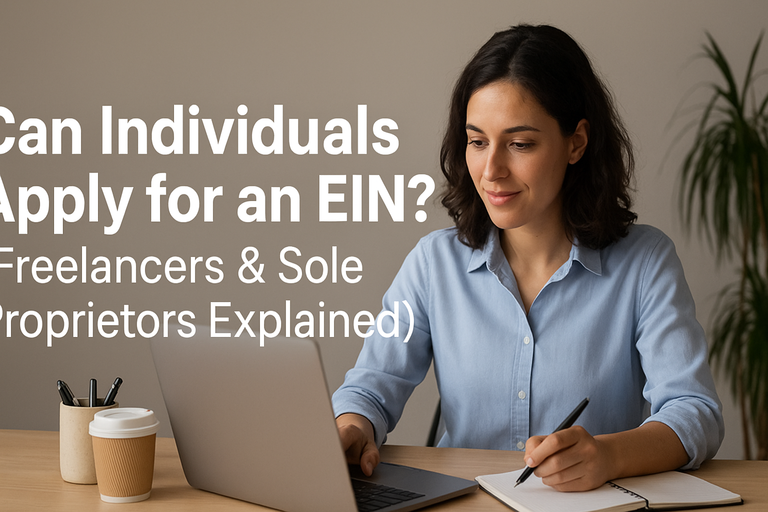
Can Individuals Apply for an EIN? (Freelancers & Sole Proprietors Explained)
If you’re a freelancer, independent contractor, or sole proprietor in the United States, you’ve probably heard about the Employer Identification Number (EIN). It’s a nine-digit number issued by the Internal Revenue Service (IRS) to identify a business for tax purposes — but many individuals aren’t sure whether they actually need one. Let’s break down who needs an EIN, why it might be beneficial, and how to apply.
Nov. 10, 2025, 3:31 p.m.
Read more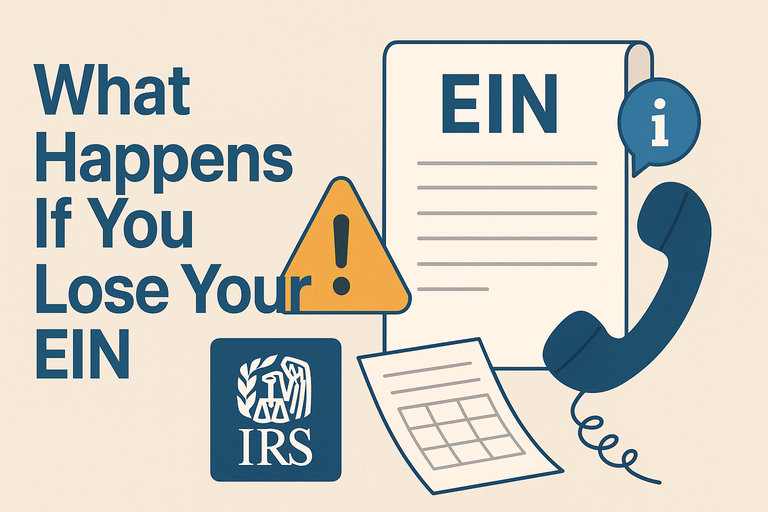
What Happens If You Lose Your EIN
If you lose or forget your EIN (Employer Identification Number), don’t worry — the IRS has clear steps to help you recover it. Here’s a full breakdown:
Nov. 9, 2025, 7:45 p.m.
Read more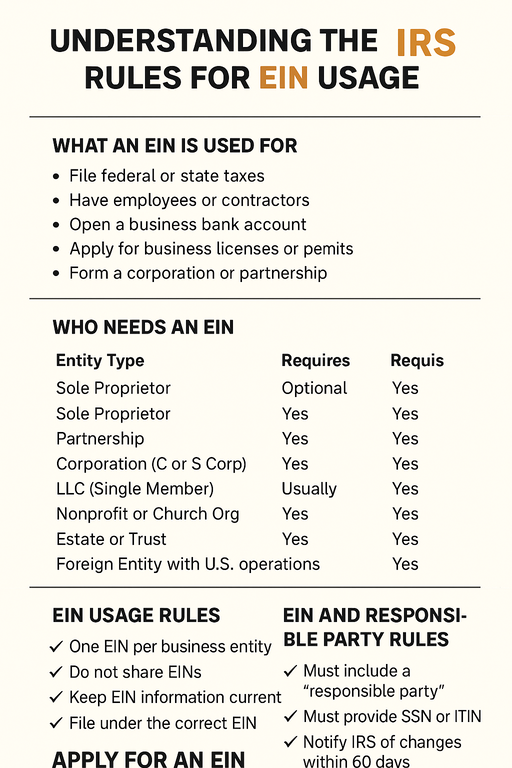
Understanding the IRS Rules for EIN Usage
An Employer Identification Number (EIN) is a unique nine-digit number issued by the Internal Revenue Service (IRS) to identify a business entity for tax purposes. Think of it as your business’s Social Security number — it’s how the IRS tracks your company’s financial activity, tax filings, and compliance. Understanding the rules for EIN usage is essential for any U.S. business owner, whether you’re running a sole proprietorship, corporation, LLC, nonprofit, or partnership.
Nov. 8, 2025, 7:57 p.m.
Read more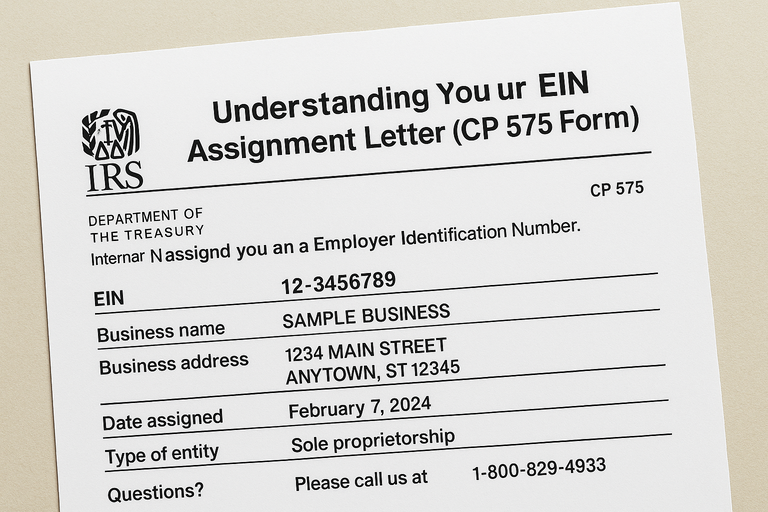
Understanding Your EIN Assignment Letter (CP 575 Form)
When you apply for an Employer Identification Number (EIN) with the IRS, you’ll receive a crucial document called the EIN Assignment Letter, officially known as Form CP 575. This letter is more than just a confirmation — it’s your business’s proof of identity for tax, banking, and legal purposes. In this guide, we’ll break down what the CP 575 letter is, what it contains, and why it’s so important to keep it safe.
Nov. 6, 2025, 8:26 p.m.
Read more