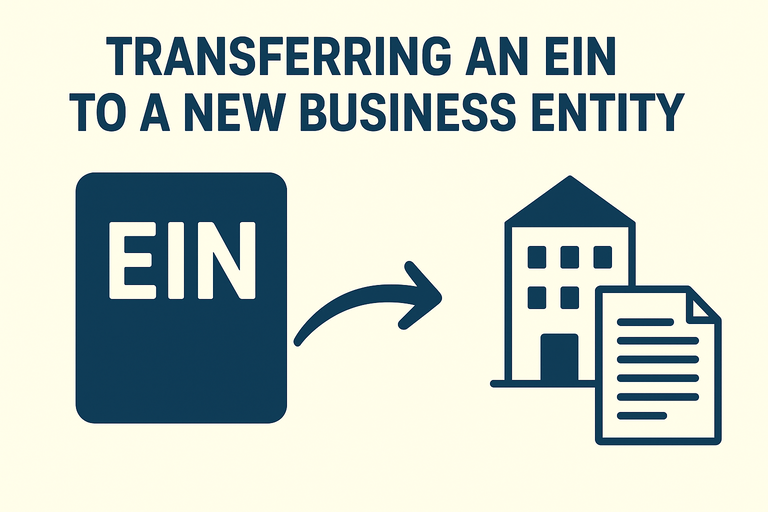
1. Understanding EIN Ownership
-
An EIN is tied to the legal structure and ownership of a business (e.g., sole proprietorship, LLC, corporation, partnership).
-
Changes in ownership, structure, or type of entity usually require a new EIN.
2. When You Might Keep the Same EIN
You can generally keep your existing EIN if the entity type doesn’t change, such as:
-
A sole proprietorship continues under the same owner.
-
A corporation remains a corporation, even if it changes its business name or address.
-
A partnership adds or removes partners, but the entity type stays the same.
Important: Major changes, like converting a sole proprietorship to an LLC or a partnership to a corporation, require a new EIN.
3. Situations Requiring a New EIN
You need a new EIN if:
-
You change your business structure (e.g., from LLC to corporation, or sole proprietorship to LLC).
-
You acquire or merge a business that isn’t a continuation of the old entity.
-
You have ownership changes in a corporation (sometimes, if over 50% of stock changes hands) or partnership.
-
You become a trust or estate.
4. How to Get a New EIN
-
Apply through the https://www.einregister.online/
-
You can also apply via phone (502) 547-2551
-
The IRS provides guidance in IRS Publication 1635.
5. Special Notes
-
You cannot “transfer” an EIN from one legal entity to another just to keep continuity.
-
If your EIN is associated with tax filings, licenses, or permits, you may need to update records with other agencies when you form a new entity.
Example Scenario:
You have a sole proprietorship with EIN 12-3456789 and now form an LLC. Even if the LLC is 100% owned by you, you must apply for a new EIN for the LLC. You cannot simply use the old EIN.