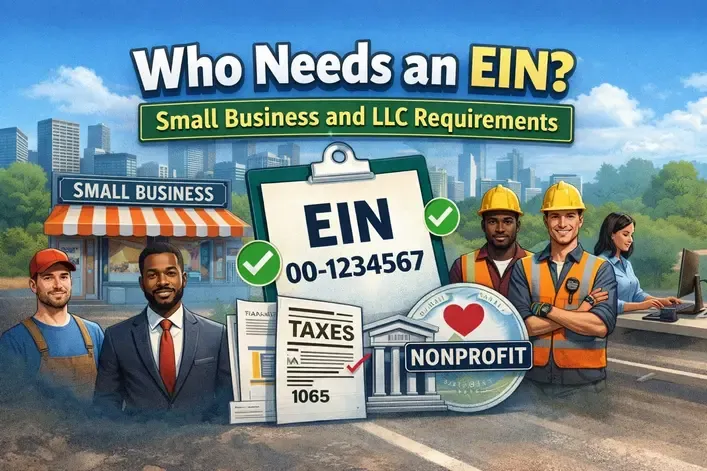
Who Needs an EIN?
1. Businesses With Employees
-
If your business hires employees, you must have an EIN to report employment taxes.
-
This includes full-time, part-time, and household employees.
2. Corporations and Partnerships
-
Corporations (C-Corp or S-Corp): EIN required, even if you’re the only owner.
-
Partnerships: Must have an EIN to file partnership tax returns (Form 1065).
3. Limited Liability Companies (LLCs)
-
Single-member LLCs: Usually not required to get an EIN unless they hire employees, have excise tax obligations, or need to open a business bank account.
-
Multi-member LLCs: Always need an EIN to file partnership taxes and separate owner liabilities.
4. Nonprofits
-
501(c)(3) organizations and other nonprofits need an EIN to apply for tax-exempt status and open bank accounts.
5. Trusts, Estates, and Other Entities
-
Certain trusts, estates, and governmental entities require an EIN for tax purposes.
When a Sole Proprietor Needs an EIN
Even if you run a sole proprietorship, you need an EIN if:
-
You hire employees
-
You operate as a partnership or corporation
-
You need a business bank account separate from your personal account
-
You withhold taxes on income, such as for contractors
How to Apply for an EIN
-
Online (fastest method) via https://www.einregister.online/
-
By phone: (502) 547-2551
Tip: You’ll get your EIN immediately if you apply online.
Key Takeaways
-
Almost all LLCs, corporations, and partnerships need an EIN.
-
Sole proprietors may only need an EIN if hiring employees or separating business finances.
-
Getting an EIN is free and usually instant online.
-
Having an EIN simplifies tax filing, banking, and legal compliance.