1. What Is an EIN?
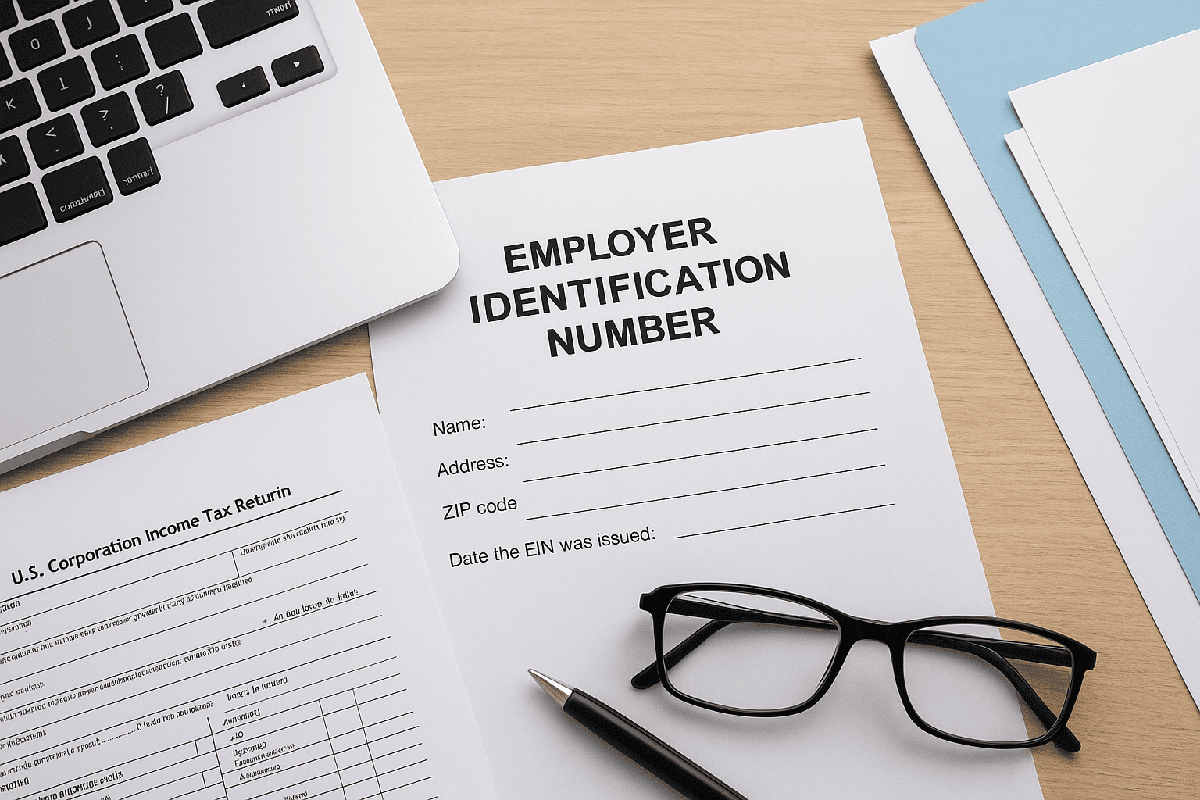
An Employer Identification Number (EIN) is a nine-digit number issued by the Internal Revenue Service (IRS) to identify a business entity.
Example: 12-3456789
The IRS uses this number to associate all tax filings, payments, and compliance records with the correct business. Every corporation, partnership, and most LLCs are required to have one — and even some sole proprietors use EINs to separate business and personal finances.
2. EINs as a Tax Identity System
Just as an individual’s Social Security Number (SSN) tracks income and tax payments, the EIN performs the same function for businesses.
The IRS uses EINs to:
-
Match tax returns (income, payroll, and excise) with the correct entity.
-
Track payments and credits made to a specific business.
-
Maintain consistency in audits, compliance checks, and reporting.
-
Ensure that each employer properly withholds and submits employee taxes.
Without an EIN, it would be nearly impossible for the IRS to manage millions of business taxpayers accurately.
3. Connecting EINs to Business Tax Obligations
Your EIN links directly to multiple federal tax responsibilities, including:
a. Income Taxes
Businesses use their EIN to file federal income tax returns (Form 1120 for corporations, Form 1065 for partnerships, etc.).
Each filing is tracked under the EIN, ensuring accurate recordkeeping across fiscal years.
b. Employment Taxes
Employers use their EIN to:
-
Report wages paid to employees.
-
Submit payroll taxes (Form 941 or 944).
-
File W-2 forms for each worker.
The EIN ties these records together, allowing the IRS to confirm that employers are paying and reporting correctly.
c. Excise and Specialty Taxes
Industries such as trucking, fuel, and alcohol rely on EINs for excise tax filings. For example:
-
The Heavy Vehicle Use Tax (HVUT) (Form 2290) requires an EIN.
-
Trucking companies use their EIN to report taxes for each qualifying vehicle.
4. EINs and IRS Compliance Systems
The IRS uses EINs to automate compliance monitoring. This includes:
-
Flagging businesses that fail to file required returns.
-
Matching payroll tax deposits with reported wages.
-
Verifying that contractors and vendors are reporting income accurately (via 1099 filings).
-
Tracking ownership changes, mergers, or entity reorganizations.
By linking every activity to an EIN, the IRS can detect irregularities or potential tax evasion more efficiently.
5. EINs Simplify Multi-Agency Reporting
Your EIN isn’t just for the IRS — it also helps with:
-
Social Security Administration (SSA): For employee wage reporting.
-
U.S. Department of Labor: For unemployment insurance and wage compliance.
-
State Revenue Agencies: For sales and income tax coordination.
Because all reports use the same identifier, government agencies can synchronize data, improving efficiency and reducing fraud.
6. Compliance and Transparency Benefits for Businesses
Having and properly using an EIN:
-
Demonstrates legitimacy and professionalism to clients and financial institutions.
-
Makes it easier to open business bank accounts and obtain financing.
-
Keeps business and personal tax records legally separate.
-
Helps maintain a clean audit trail if the business is ever reviewed by the IRS.
7. Risks of EIN Misuse or Noncompliance
If a business fails to properly use its EIN:
-
Tax payments might not be credited correctly.
-
Penalties may apply for late or misfiled returns.
-
It can raise red flags for audits or IRS enforcement actions.
Additionally, EIN identity theft — where someone uses your number fraudulently — can cause severe reporting errors, so businesses should safeguard it like any other sensitive data.
In Summary
The EIN is much more than just a registration number — it’s the IRS’s key tool for managing the nation’s business tax system. From payroll to corporate income taxes, every report and payment flows through this identifier. Proper use of your EIN ensures your business stays compliant, transparent, and in good standing with federal tax authorities.