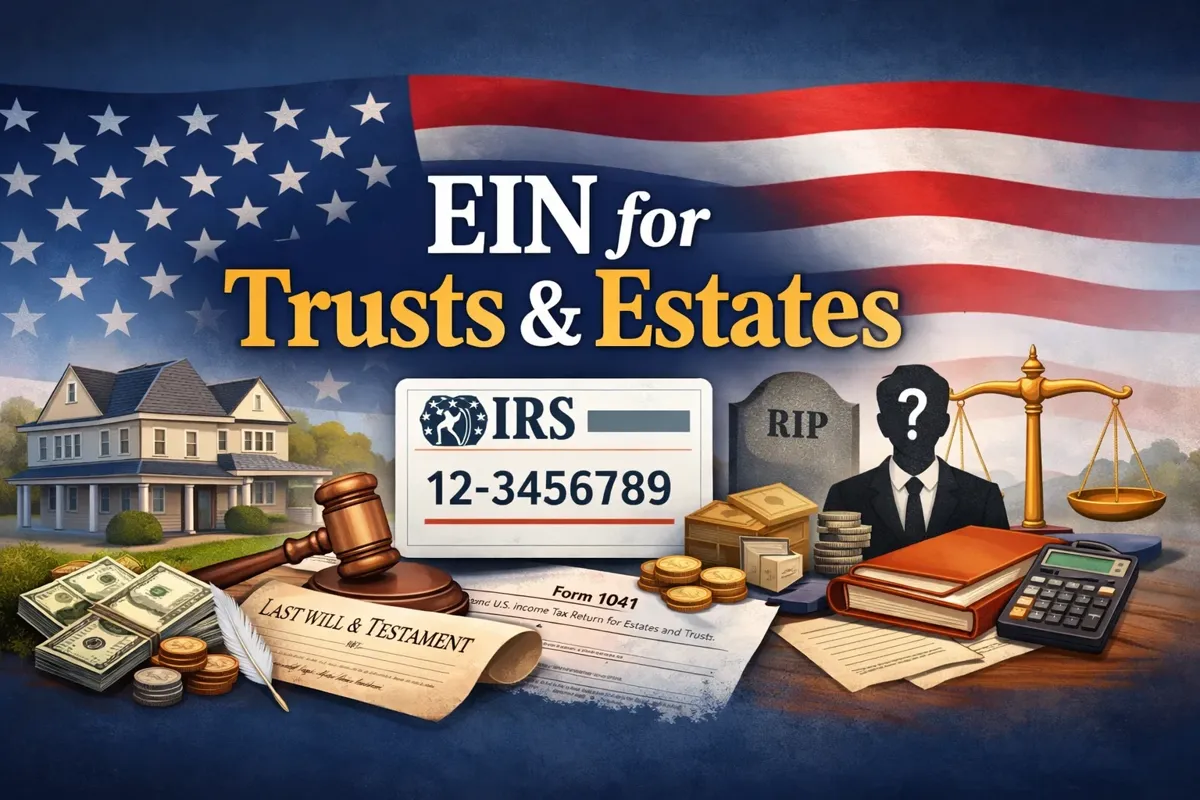
What Is an EIN for a Trust or Estate?
An EIN for a trust or estate is used to identify the entity for federal tax purposes, separate from the Social Security Number (SSN) of the grantor, trustee, or deceased individual.
When Does a Trust Need an EIN?
A trust generally needs an EIN if it:
-
Is irrevocable
-
Generates income that must be reported separately
-
Has a trustee managing assets
-
Files Form 1041 (U.S. Income Tax Return for Estates and Trusts)
-
Opens a bank or investment account in the trust’s name
Note:
A revocable living trust may use the grantor’s SSN during the grantor’s lifetime. Once the grantor dies, the trust becomes irrevocable and must obtain an EIN.
When Does an Estate Need an EIN?
An estate always requires an EIN when:
-
A person has passed away and assets are held in their estate
-
Income is earned after death (interest, dividends, rent, etc.)
-
The estate files Form 1041
-
An estate bank account is opened
The EIN replaces the deceased person’s SSN for estate-related tax matters.
Who Applies for the EIN?
-
Trusts: The trustee
-
Estates: The executor or personal representative
How to Apply for an EIN for a Trust or Estate
You can apply:
-
Online (fastest method, immediate EIN) - https://www.einregister.online/
-
By phone (502) 547-2551
You’ll need:
-
Name of the trust or estate
-
Responsible party’s SSN or ITIN
-
Type of entity (trust or estate)
-
Date the trust was funded or date of death
Tax Forms Associated with Trusts and Estates
-
Form SS-4 – Application for EIN
-
Form 1041 – Income tax return for trusts and estates
-
Schedule K-1 – Reports income distributed to beneficiaries
Common Mistakes to Avoid
-
Using the deceased person’s SSN instead of an estate EIN
-
Applying for multiple EINs unnecessarily
-
Choosing the wrong trust type on Form SS-4
-
Failing to obtain a new EIN when a revocable trust becomes irrevocable
Key Takeaways
-
Estates always need an EIN
-
Irrevocable trusts require an EIN
-
Revocable trusts need an EIN after the grantor’s death
-
EINs ensure proper tax reporting and financial management
Final Tip
If the trust or estate is complex or has significant assets, consulting a tax professional or estate attorney can help avoid IRS issues and penalties.
https://www.irs.gov/businesses/small-businesses-self-employed/operating-a-business